Painting the Sea Monsters
A behind-the-scenes look at bringing the cask carving to life in color
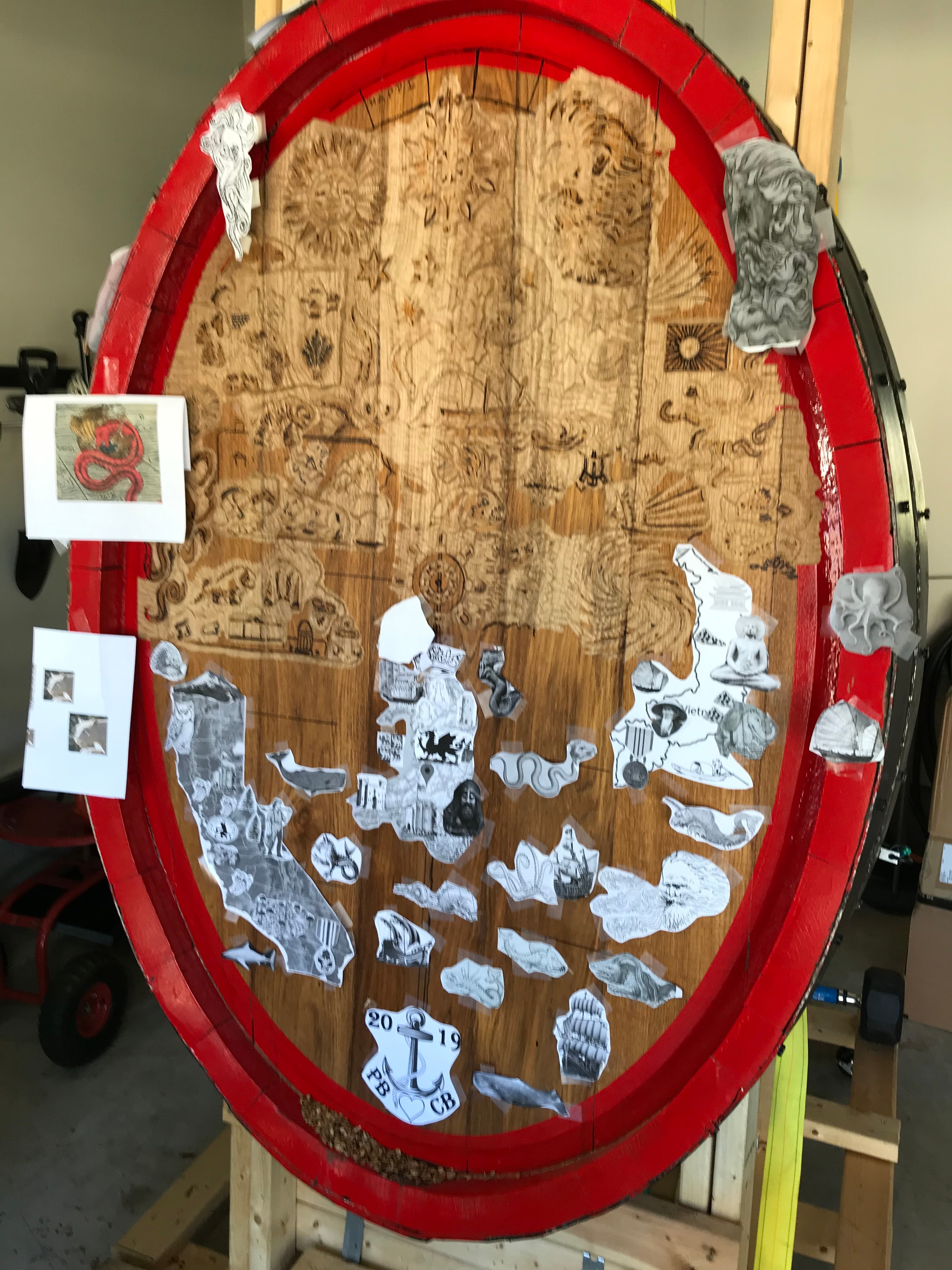
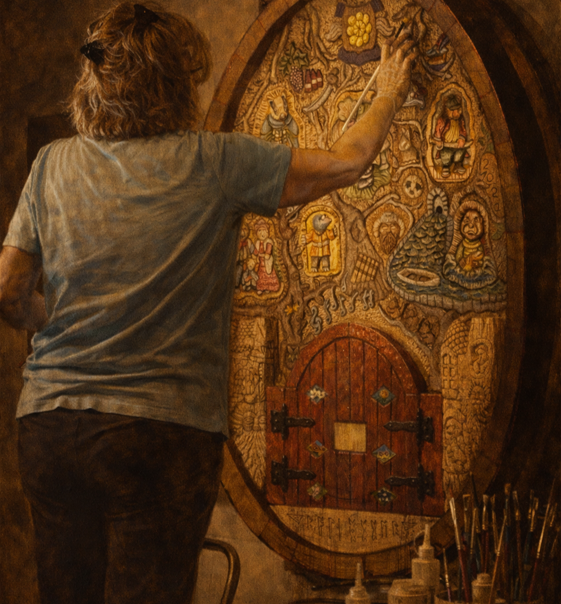
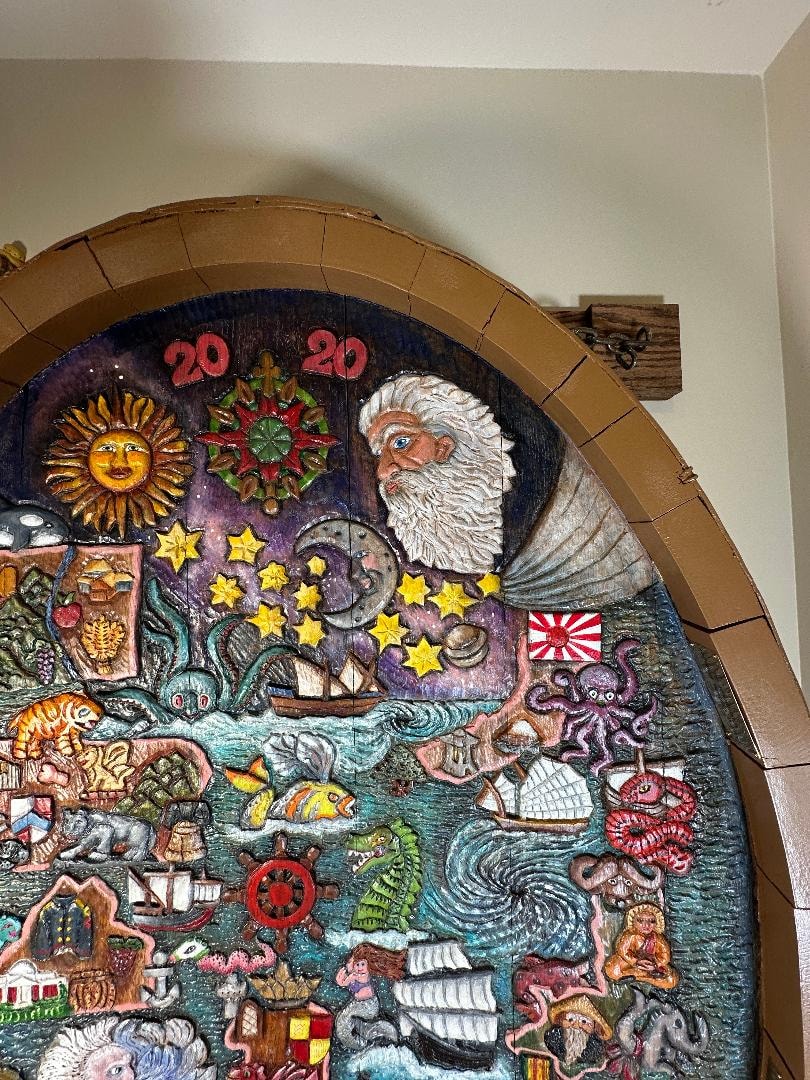
Once the carving of the Sea Monsters cask end was complete, the work of painting began — a process as painstaking as the carving itself. Each creature was brought to life with layers of color, the deep blues and greens of the ocean contrasting with the vivid scales, fins, and coiling bodies of the monsters. This page documents that process, from the first washes of background color to the final detail work on each creature's eye.
| Subject | The painting process for the Sea Monsters cask end |
| Medium | Oil and acrylic paint on hand-carved oak |
| Cask size | Approximately 6 feet × 5 feet |
| Location | Bolinger family studio, Virginia |
The Painting Process
Painting a carved cask end presents challenges unlike painting on a flat canvas. The relief carving creates deep shadows and highlights that must be worked with rather than against — the paint must follow the contours of the wood, pooling in the recesses and sitting lightly on the raised surfaces. For the Sea Monsters piece, the ocean background was laid in first, building up layers of blue-green to suggest depth and movement. Each creature was then painted individually, with reference to the medieval and Renaissance map illustrations that inspired the original carving. The final stage — adding the fine detail work to eyes, scales, and the curling tips of waves — required the smallest brushes and the steadiest hand.
Process Photos